

The model was never the security boundary
The enterprise AI security conversation focuses almost entirely on model capability. In production, the real boundary is everything around it: identity, permissions, workflow authority, and audit.
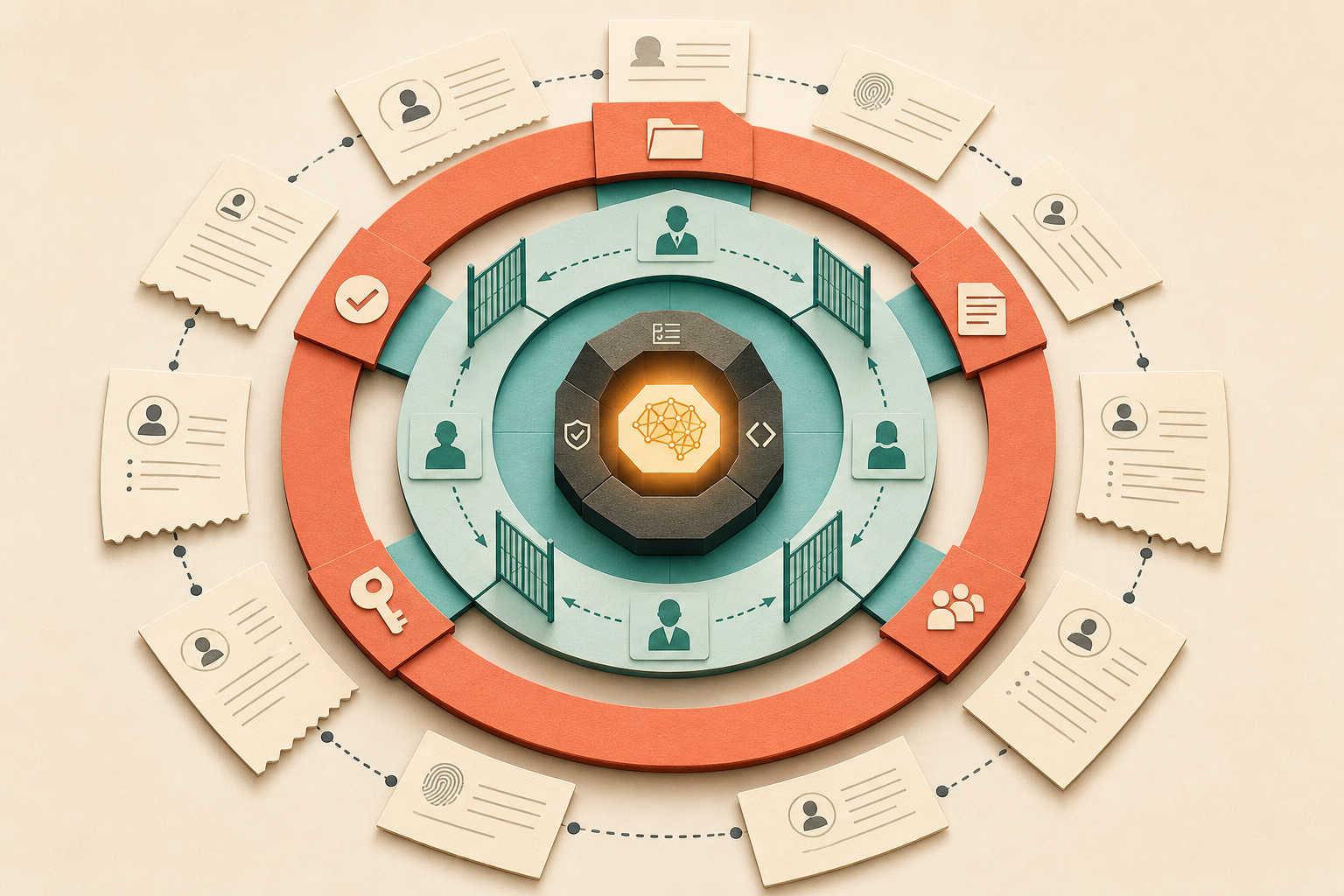
The security conversation around enterprise AI is almost entirely a model conversation. Can the model hallucinate? Can it be jailbroken? Can it leak confidential information through a well-crafted prompt? Can it be manipulated by an adversarial input buried in a document?
Those questions matter. They are also not the deepest problem.
The deeper problem is that most teams treat the model as the center of the system. In real enterprise deployments, the model is one component inside a much larger operational stack. The security boundary is not the model. It is everything around it.
The real boundary is the surrounding system
In production, the model sits inside a stack that includes identity, permissions, workflow state, retrieval systems, orchestration, tool surfaces, browser automation, document pipelines, memory systems, approval flows, observability, compliance controls, and operational policy. That surrounding system is the actual security boundary.
When an AI system moves from assistant to operator, the architectural requirements change completely. It is no longer answering questions. It is retrieving information, reasoning across systems, invoking tools, performing workflow actions, and sometimes mutating state. At that point you are not building a chatbot. You are building operational infrastructure.
An assistant makes suggestions. An operator takes actions. The security requirements for the second are an order of magnitude higher than for the first.
The moment an agent can act, every layer around the model becomes load-bearing. Identity determines what the agent is allowed to be. Permissions determine what it is allowed to touch. Workflow state determines whether an action is appropriate right now. Audit determines whether you can reconstruct what happened and prove it. None of those are model concerns.
Old vulnerabilities, new blast radius
One dangerous misconception in the current market: the real threats must look futuristic. People imagine exotic prompt attacks, advanced model manipulation, or entirely new categories of vulnerability that require entirely new security disciplines.
In reality, many of the most serious risks still originate from classic software failures:
- authentication weaknesses
- insufficient authorization checks
- unsafe API exposure
- improper data isolation between tenants
- incomplete or tamper-prone audit trails
- insecure workflow orchestration
The vulnerability classes are not new. What changes is the blast radius.
An AI platform concentrates enormous operational leverage in one place: user interactions, internal knowledge, workflow state, documents, system instructions, context memory, integration access, action surfaces, and decision logic. When those layers become interconnected through agents, a single weak boundary can expose far more than data. It can expose operational behavior. It can expose workflow control. It can expose the reasoning layer of the system itself.
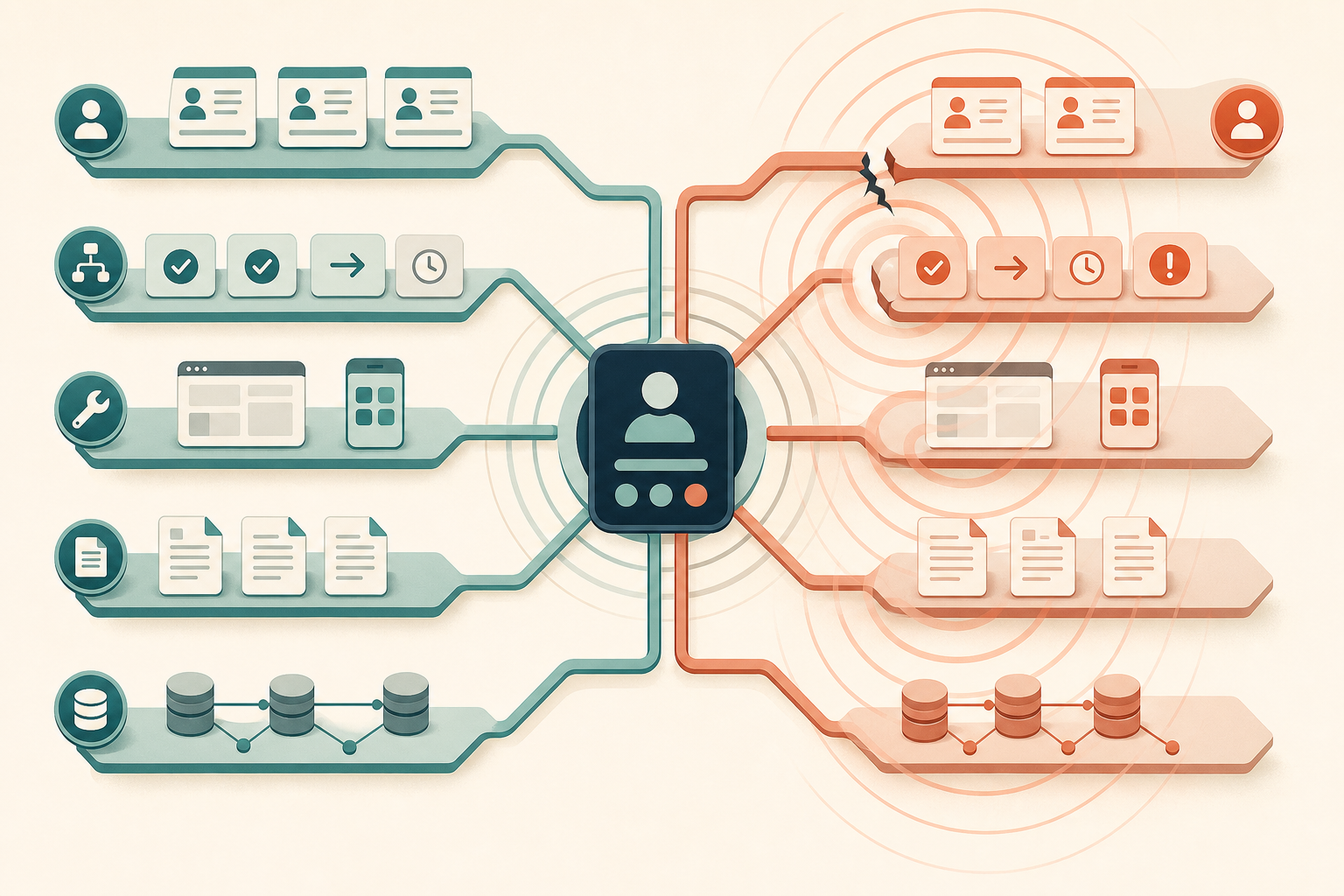
The danger is not only that AI systems can think. The danger is that AI systems can increasingly act. That asymmetry is what makes the blast radius so much larger than in traditional software.
Tool access is not permission
One of the most consistently misunderstood distinctions in agent design: giving an agent access to a tool is not the same as authorizing it to use that tool in all contexts.
A tool is an interface. Authorization comes from policy, workflow state, identity, tenancy scope, and business rules. An agent may be technically capable of invoking a tool. That does not mean it should always be permitted to do so.
In Wincora, tool execution is governed by the platform, not decided by the model. The workflow controls authority. An approval system gates consequential actions. The audit system records execution in full. The model does not become a hidden superuser just because a tool surface is reachable in its context window.
This matters more than it might seem. Once agents begin operating across sensitive workflows, unrestricted tool execution becomes one of the fastest paths to uncontrolled blast radius. The interface and the authorization layer have to be separated by design, not convention.
Agents are not human users
The largest architectural mistake organizations make when adopting agentic systems is treating agents as extensions of existing human user identities. They are not.
A human operating through a screen experiences constraints that agents do not. The interface shapes behavior. The workflow shapes visibility. A UI limits what actions are even visible, let alone reachable. Humans are naturally rate-limited by the mechanics of clicking through one screen at a time.
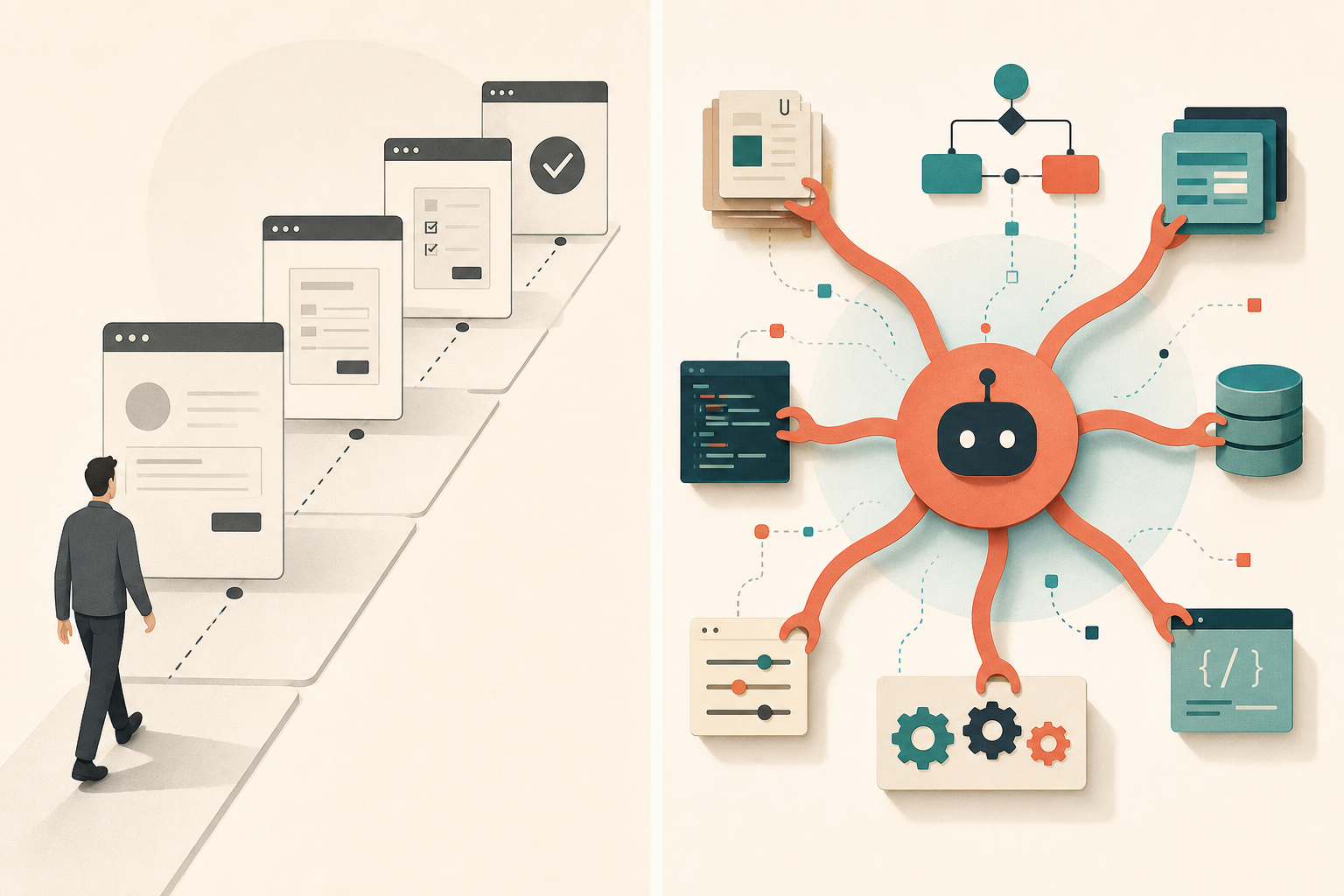
Agents operate differently. They invoke systems programmatically. They assemble context dynamically. They can span multiple operational domains in a single execution run. That means enterprise systems need explicit identity concepts for agents themselves: which agent performed this action, which version of the orchestration policy was active, which tenant boundary applied, which workflow state authorized the action, and whether the agent can be revoked or paused immediately.
Those are infrastructure questions. Increasingly, they are also board-level governance questions.
In our domain, this is visceral
Visa processing is not a generic enterprise workflow. It involves government portals, identity documents, employment records, financial history, legal deadlines, and cases where operational errors have real consequences for real people. Compliance is not a feature you add when the product is successful. It is a precondition for being trusted in the first place.
This is not a domain where you bolt generic agents onto existing workflows and plan to address governance later. That approach works for low-stakes consumer products. In regulated, high-trust operational contexts, it does not.
For Wincora, governance is built into the platform architecture:
- tenant-scoped authorization at every layer
- workflow state as the authoritative source of truth, never the conversation
- explicit approval gates for consequential actions
- audit trails that record what the agent saw, not just what it did
- revocable agent sessions that can be paused or terminated mid-operation
- least-privilege tool exposure with policy-governed execution
None of that is exotic. It is the infrastructure discipline that makes an agent trustworthy enough to operate inside a real workflow with real consequences.
Capability without governance is liability
There is a pattern emerging in enterprise AI: organizations are racing to maximize agent capability without investing proportionally in governance infrastructure. A highly capable system with weak operational controls is not a competitive advantage. It is accumulated organizational risk.
The future winners in enterprise AI will not simply be the companies with the most capable models. They will be the companies that made those capabilities governable. Auditable. Revocable. Bounded by identity, policy, and workflow authority.
At Wincora, we made that decision early, and it has shaped every architectural choice since. We are not building AI features layered onto an existing product. We are building governed operational infrastructure, where the security boundary is the platform itself, not the model inside it. In high-trust workflow domains, the product is not only automation. The product is trust.
More from the blog
Automation you can watch
Filling a government form is the easy demo. The hard part is everything around it: sessions that die, portals that ask unexpected questions, and results you cannot afford to assume. The design rules behind our embassy automation.
Visa requirements are a versioning problem
Most of the industry stores visa rules like content: pasted in, overwritten, impossible to audit. We treat them like code, with research citations, human review, versions, and replayable decisions.
The harness is the product
Concrete patterns from the Wincora agent harness: browser as state, explicit goals, semantic tools, stratified memory, and why production AI starts to look like distributed systems.
Ready to see Wincora in action?
Join the early access program and be among the first teams to operate visa processing on a modern, intelligent platform.