

The harness is the product
Concrete patterns from the Wincora agent harness: browser as state, explicit goals, semantic tools, stratified memory, and why production AI starts to look like distributed systems.
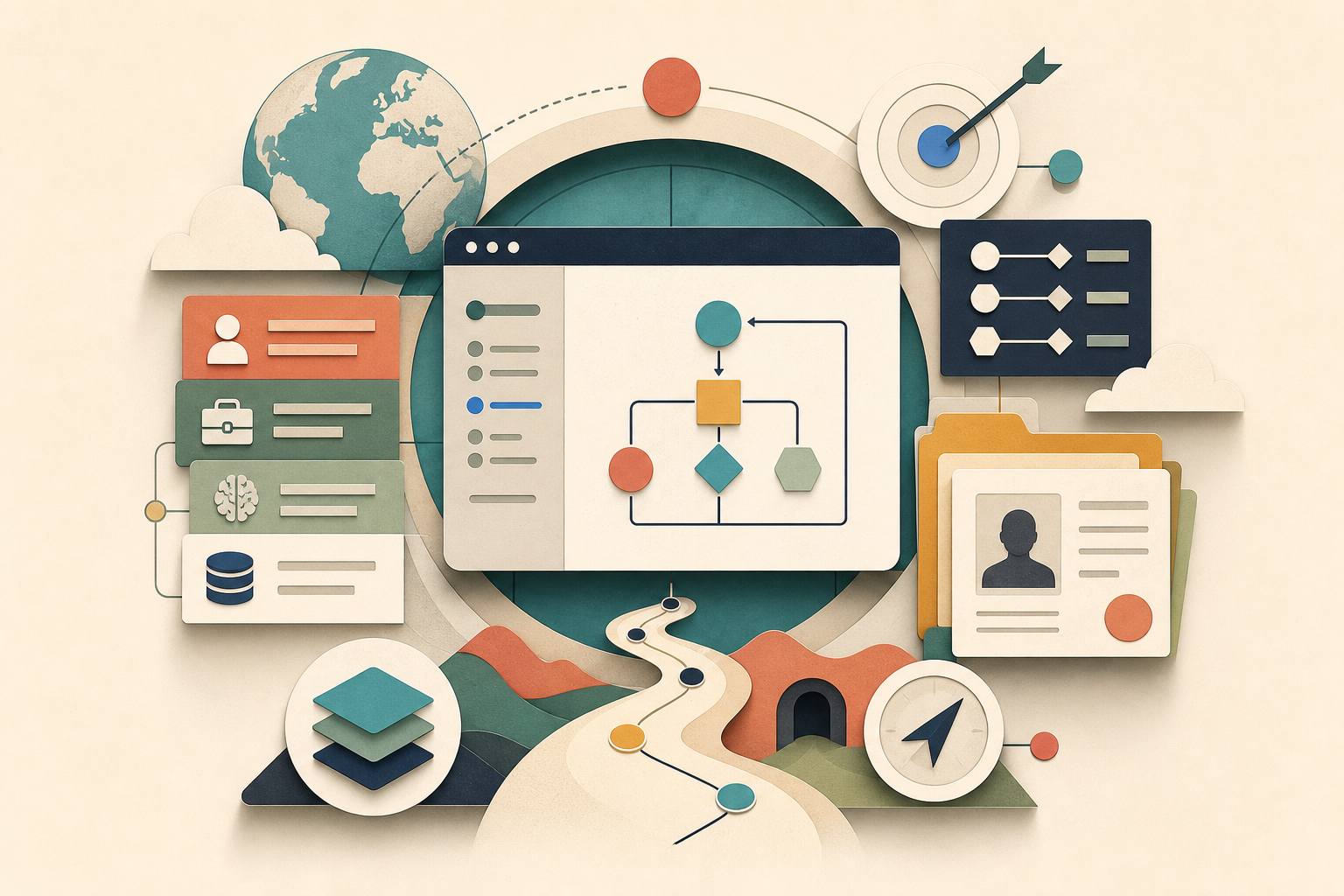
In the previous post, we argued that the model is rarely the real bottleneck in production AI agents. The model is usually capable enough; the orchestration layer around it is where things actually fail. We landed on a working thesis: the harness is the product.
This post is about what that actually looks like once you commit to it. The patterns below are what we ended up with after rebuilding our agent infrastructure for the realities of long-running, operational, vertical-specific AI.
The browser is state, not pixels
Nyx, our autonomous fulfillment engine, made the next problem painfully obvious. Browser automation generates absurd volumes of context: DOM state, accessibility trees, screenshots, form structures, navigation history, error states, transient UI changes.
Embassy websites are an especially hostile environment. Many are slow, inconsistent, partially broken, dynamically rendered, regionally unstable, or actively resistant to automation. A "feed everything into the model" approach is economically and operationally impossible.
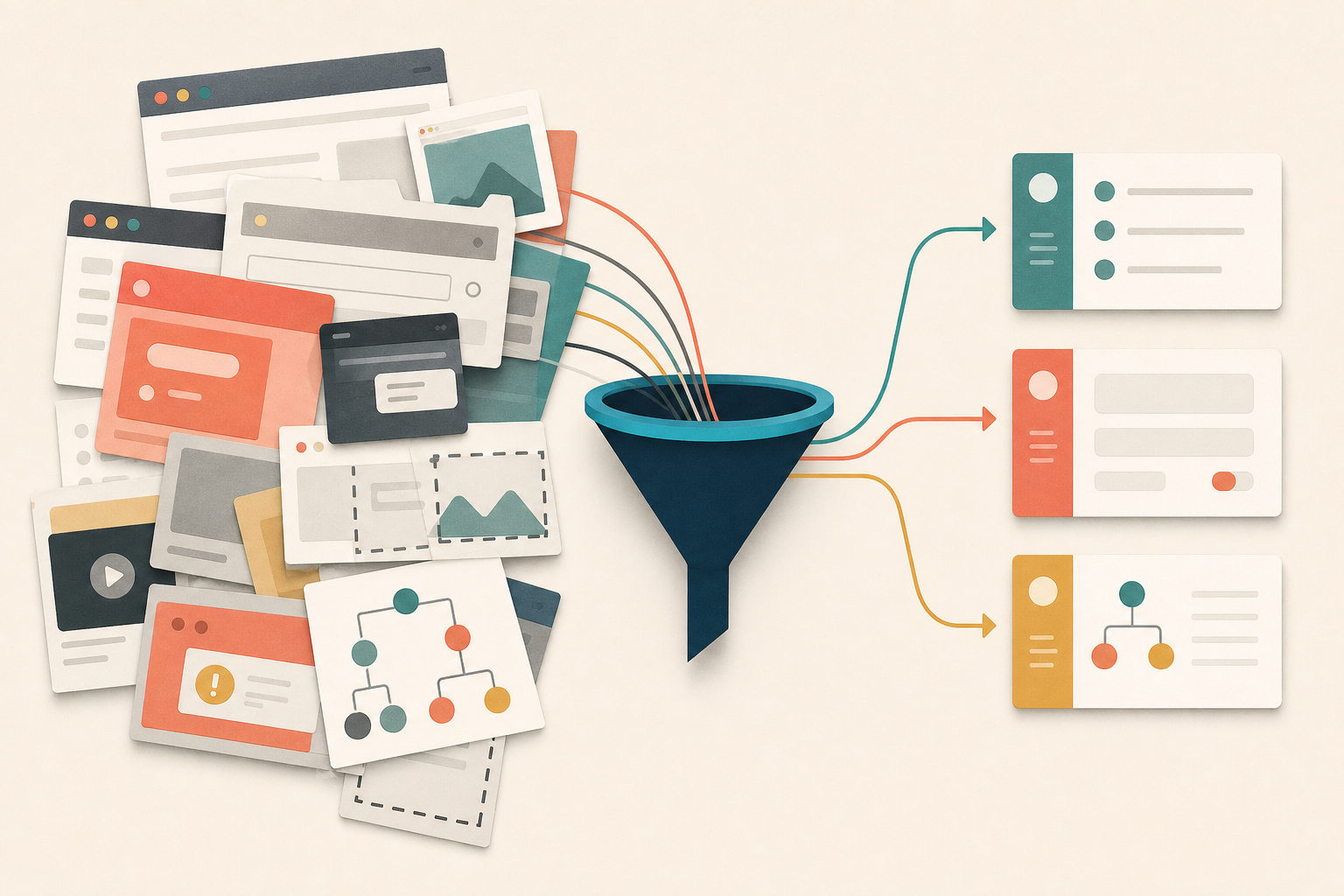
So the harness became the intelligence amplification layer. Nyx operates on a layered cognition model. The orchestration model maintains operational awareness and action planning. More expensive visual-reasoning models are invoked only when uncertainty crosses defined thresholds. Structured browser abstractions compress environmental state into operationally relevant representations.
In other words, we stopped treating the browser as pixels. We started treating it as state. Most of the browser is irrelevant to the current goal, and the harness's job is to know which parts matter right now.
Goals must remain explicit
One of the strangest failure modes in long-running agents is what we ended up calling motivational drift.
The agent technically keeps operating. But it slowly detaches from the actual objective. It starts optimizing for local completion rather than global success: satisfying the current screen, the current tool response, the current form field, while losing sight of the operational outcome.
In our case, the goal is not "fill out a form." The goal is:
Successfully complete the visa case while preserving correctness, compliance, and recoverability.
Those are very different optimization targets. So we designed the harness around persistent operational goals. Every inference cycle re-establishes:
- the current objective
- completion criteria
- operational constraints
- recovery strategy
- failure boundaries
- escalation conditions
This sounds obvious until you watch how many agents implicitly rely on the model to maintain these objectives across long horizons. LLMs are not reliable custodians of long-term operational intent. The harness has to be that layer.
Semantic tools, not infrastructure primitives
A common anti-pattern in agent systems is exposing raw infrastructure primitives directly to the model. We moved heavily toward operationally meaningful tool surfaces.
Not click_coordinates. Instead, submit_passport_information.
Not read_dom. Instead, extract_travel_document_validation_status.
The difference is enormous. The more semantic the tool surface, the less cognitive overhead the model spends translating low-level mechanics into operational meaning. Reliability goes up. Tokens go down. Recovery behavior gets simpler, because semantic operations have well-defined success and failure shapes; raw primitives do not.
There is a real engineering cost. Every semantic tool is a small product surface that has to be designed, tested, and maintained. It is worth it. The model is not a debugger. It should not be reasoning about why a click missed by three pixels.
Memory has lifetimes
Most systems treat context as a flat blob. In reality, context has stratification.

Some information is ephemeral. Some operational. Some strategic. Some immutable. Some dangerous when stale.
Our harness treats memory as layered:
- Immediate working context: the current turn's reasoning surface.
- Operational state: the live workflow projection.
- Long-horizon summaries: distilled insights from earlier in the case.
- Structured workflow memory: the case's persistent state machine.
- Persistent case records: the immutable audit trail.
The model only receives what is necessary for the current cognitive operation. Nothing more.
This is one of the least-discussed but most important aspects of production AI engineering. Efficiency is not just about token cost. It is about preserving signal density. As prompts grow, intelligence often decreases, not because the model is weaker, but because cognition becomes diluted.
The harness, in that sense, is a cognitive compression engine. Its job is not to feed context. Its job is to preserve relevance.
Production AI looks like distributed systems
The deeper we went into agents, the more the system started to resemble classical distributed systems engineering. State management. Consistency boundaries. Orchestration. Event-driven architecture. Recovery semantics. Observability. Idempotency. Workflow projection.
These ended up mattering more than any prompt-engineering trick. The vocabulary that helped us was the vocabulary we already had from building real platforms.
That should be reassuring to engineers coming from backend or infrastructure backgrounds: the discipline you already have transfers. It should be sobering for teams treating agents as a thin wrapper around a chat completion endpoint: the discipline they do not yet have is the discipline that actually carries production weight.
Vertical integration compounds
This is where vertical integration starts paying for itself. Because we control the entire stack (conversational intake, workflow orchestration, browser automation, visa intelligence, operational state, document systems, messaging, agent harnesses), we can shape context at every layer. Generic agent platforms operating across arbitrary environments do not have that lever.
It lets us do things that thin wrappers around foundation models genuinely struggle with:
- dynamic context regeneration grounded in authoritative state
- workflow-native memory rather than chat-native memory
- semantic operational tooling, not raw primitives
- long-horizon goal persistence across sessions
- state-aware prompt synthesis
- adaptive model escalation based on uncertainty
- efficient browser abstraction tuned to a known vertical
- operational recovery flows with first-class semantics
None of these are exotic individually. The compounding effect of having all of them under one roof is what differentiates an operational AI system from a demo.
The model reasons; the harness operationalizes reasoning
That line is the working axis of how we think about this stack. The model is a reasoning substrate. The harness is what makes reasoning operational. In a demo, the first half is what looks impressive. In production, the second half is what determines whether the system is trustworthy enough to put your operations license on.
We think the future of serious agent systems will not belong to thin wrappers around foundation models. It will belong to companies that deeply integrate orchestration, state, workflows, tooling, and cognition into unified operational systems.
That is what Wincora is. That is the bet.
More from the blog
Automation you can watch
Filling a government form is the easy demo. The hard part is everything around it: sessions that die, portals that ask unexpected questions, and results you cannot afford to assume. The design rules behind our embassy automation.
Visa requirements are a versioning problem
Most of the industry stores visa rules like content: pasted in, overwritten, impossible to audit. We treat them like code, with research citations, human review, versions, and replayable decisions.
The model was never the security boundary
The enterprise AI security conversation focuses almost entirely on model capability. In production, the real boundary is everything around it: identity, permissions, workflow authority, and audit.
Ready to see Wincora in action?
Join the early access program and be among the first teams to operate visa processing on a modern, intelligent platform.