

Building Wincora: principles for a modern visa platform
The architectural and product principles behind Wincora: what we keep, what we throw out, and why visa operations deserve a system rebuilt from first principles.
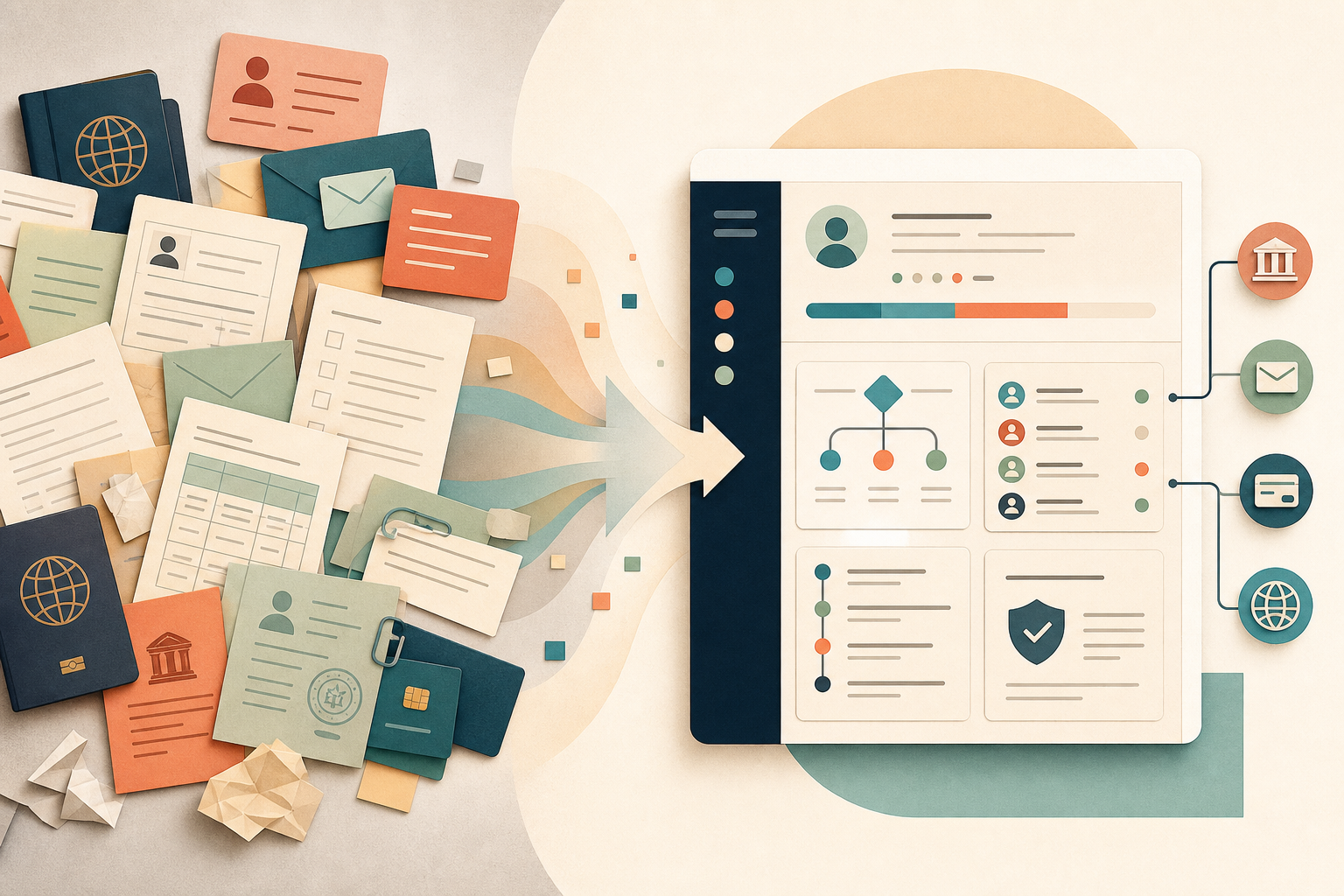
Visa processing is one of those domains where almost every operator we talk to has the same story: a stack of three or four tools held together by spreadsheets, email threads, and tribal knowledge that lives in one or two senior staff members' heads. The work is high-stakes (a missed document means a missed flight), yet the systems supporting it look like 2008.
When we started building Wincora, the question wasn't "how do we make this 10% better?" It was "if we got to design this from scratch today, with everything we know now, what would it look like?" This post walks through the principles we landed on, the trade-offs they imply, and what they mean for the architecture you'll see when we open up the platform.
1. One workspace, not five tabs
The most common pain we heard in early conversations wasn't slow software. It was context-switching. A case manager touches a CRM for client info, a document portal for uploads, an email client for embassy correspondence, a spreadsheet for fees, and a chat app for internal questions. Each switch costs attention; each handoff between tools is a place for state to drift.
Wincora collapses these into a single workspace where the case is the unit of work. Documents, communication, fee status, and embassy state live on the case, not in five separate systems that happen to share an applicant ID.
Why this matters more than it sounds
Unifying the workspace isn't a UI win. It's a data-model win. When a document validation, an embassy email, and a payment all reference the same case object, you can finally do the things that were impossible before: real status timelines, accurate SLA tracking, and audit trails that actually answer "who knew what, when?"
2. AI as an operator, not a chatbot
Every product in 2026 has a chatbot in the corner. We don't think that's where AI earns its keep in visa processing. The work isn't conversational. It's repetitive, structured, and auditable: validating a passport scan, comparing a bank statement against a country's financial-proof rules, drafting a cover letter from a known template.
So we treat AI as a first-class operator on the team. It picks up tasks from the same queue as humans, with the same audit trail, the same SLA, and the same review process. When it gets something wrong, you see exactly which step failed and why.
The bar isn't "the AI is impressive." The bar is: would you trust this output enough to put your operations license on it?
An early design note, still pinned in our docs
3. Country rules as code, not as PDFs
Visa requirements change constantly. A country tweaks a financial threshold, adds a new document, or reorders an interview booking flow, and every visa operator on the planet finds out by reading a PDF or, worse, by getting an application rejected. We codify these rules.
Each country's requirements live in a versioned, structured form that the platform can reason about directly. A new rule isn't a memo to staff; it's a deploy. Validation, fee calculation, and document checklists update everywhere at once.
Here's a (simplified) shape of how a single rule looks internally:
{
  country: "AU",
  visa: "subclass-600",
  effective_from: "2026-04-01",
  rules: {
    financial_proof: {
      min_balance_aud: 5000,
      statement_age_days: { max: 30 },
      acceptable_currencies: ["AUD", "USD", "EUR", "GBP"]
    },
    documents: [
      { id: "passport", required: true, validity_months: { min: 6 } },
      { id: "itinerary", required: true },
      { id: "bank_statement", required: true, format: "pdf" }
    ]
  }
}
A case is just data flowing through these rules. When the rule changes, every open case re-evaluates against the new version, and the operator sees exactly what shifted.
4. The applicant is a user, not a row
Most visa platforms were designed for the operator. The applicant is a record that gets emailed PDF forms and asked for the same documents three times. That's a bad experience, but more importantly, it's operationally expensive: every applicant question becomes a support ticket, every re-uploaded document is a manual review, every status check is a phone call.
We treat the applicant as a real user of the platform. They get a clear view of what's needed, what's done, and what's next, in plain language, on their phone. When they upload a document, it's validated immediately, not three days later. The result: fewer support touches, faster turnaround, and applicants who actually recommend the operator.
If a piece of information would unblock the applicant, it should reach them in seconds, not be queued behind a human review for 48 hours.
5. Open by default, integrated everywhere
Visa operators don't operate in isolation. They send batches of cases to embassies, sync billing with their accounting stack, push outcomes to corporate clients' HR systems, and pull leads from marketing tools. A platform that makes any of these hard is a platform that gets worked around.
Every meaningful object in Wincora has a stable, documented API. Webhooks fire on case state changes. Imports and exports are first-class, not afterthoughts. The principle: if a customer needs to integrate, they shouldn't need to call us first.
What this adds up to
These principles are connected. A unified workspace only works if rules are structured. Rules-as-code only pays off if AI can act on them. AI as an operator only earns trust if applicants and operators see the same case truth. Open APIs only matter if there's a coherent model behind them.
The thing we're building isn't a better CRM with an AI button. It's a system where each layer reinforces the next, one we can keep extending as the visa landscape keeps shifting.
If any of this resonates with how you think about visa operations, we'd love to hear from you. Contact us to start a conversation about the platform and how you work, and help shape what ships next.
More from the blog
Automation you can watch
Filling a government form is the easy demo. The hard part is everything around it: sessions that die, portals that ask unexpected questions, and results you cannot afford to assume. The design rules behind our embassy automation.
Visa requirements are a versioning problem
Most of the industry stores visa rules like content: pasted in, overwritten, impossible to audit. We treat them like code, with research citations, human review, versions, and replayable decisions.
The model was never the security boundary
The enterprise AI security conversation focuses almost entirely on model capability. In production, the real boundary is everything around it: identity, permissions, workflow authority, and audit.
Ready to see Wincora in action?
Join the early access program and be among the first teams to operate visa processing on a modern, intelligent platform.